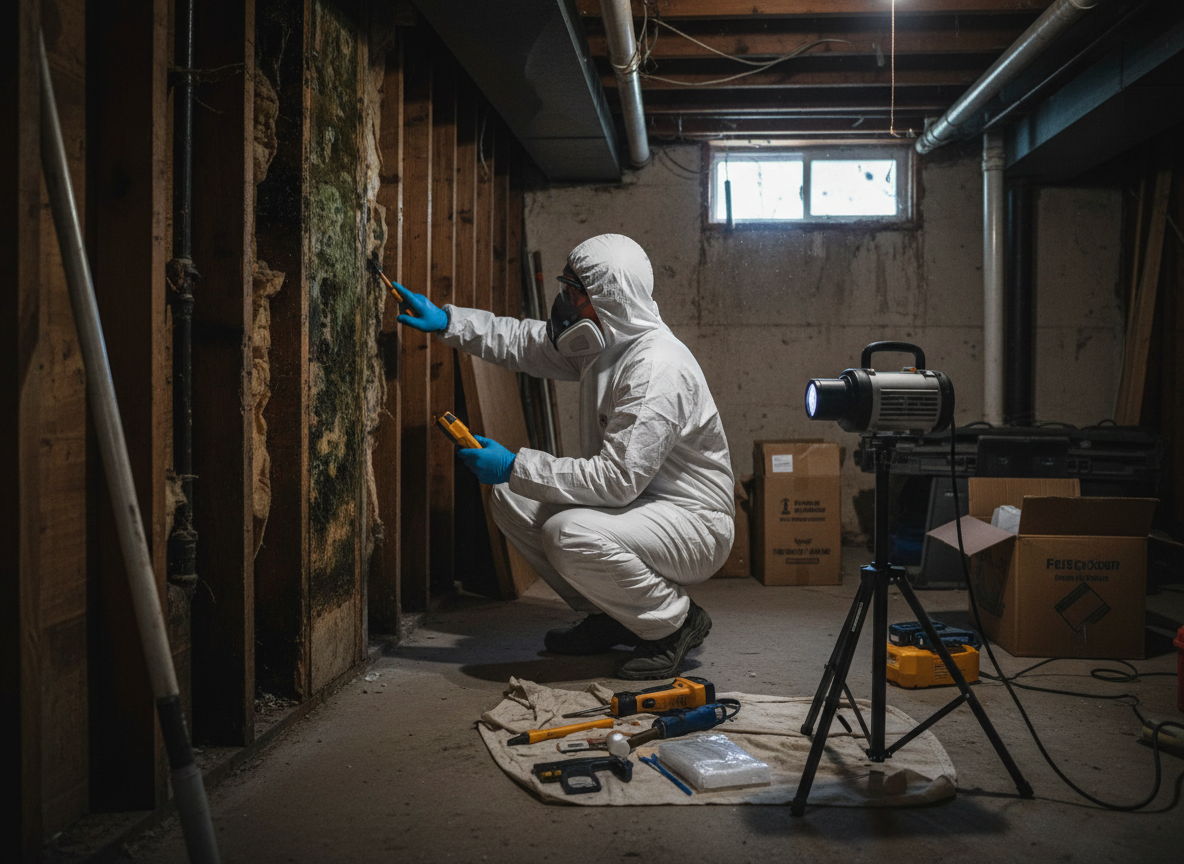
In Edwards and around Edwards Air Force Base, home mold inspection must account for the high desert climate where hot summers drive heavy air conditioning use and cool winters prompt heating that creates hidden condensation points. Base housing from earlier construction eras often features flat roofs and limited attic ventilation that trap moisture from temperature swings between Mojave and Lancaster weather patterns. Inspectors check crawl spaces, HVAC returns, and bathroom exhaust paths where dry air outside masks interior humidity spikes that allow mold to establish on drywall or insulation without visible water stains.
Kern County properties near Edwards frequently see mold growth after minor roof leaks or pipe condensation that goes unnoticed until an inspection uses moisture meters and thermal imaging. Older military family housing stock tends to have single-pane windows and minimal vapor barriers, allowing winter cool air to pull moisture through walls during heating cycles. A proper inspection documents these conditions with photos and readings rather than relying on surface appearance alone, especially in neighborhoods where wind-driven dust can obscure early discoloration.
Edge cases in this region include mold behind kitchen cabinets from evaporative cooler leaks common in desert setups and growth in laundry rooms where high summer heat meets poor venting. Inspections also evaluate soil grading around foundations because occasional heavy rains can push water against slab edges in flat terrain around the base. Reports include specific remediation recommendations tied to local building practices rather than generic advice.
Seasonal Inspection Considerations
High desert temperature swings between summer and winter change where moisture collects in Edwards homes, so inspections timed before peak heating or cooling seasons catch issues before they spread into living spaces.
Technician insight
In Edwards, the thing that catches most people out with Home mold inspection is condensation forming in attics during cool winter nights after hot summer AC use in older base housing stock, where the dry high desert air outside hides the moisture until you check with a meter.
Condensation Issue in Base Housing Attic
A resident near Edwards Air Force Base noticed musty odors during winter heating. Inspection found elevated moisture in the attic from temperature swings between day and night. Thermal imaging located the condensation zone behind insulation. Targeted drying and ventilation adjustments resolved the hidden growth before it spread to living areas.
How it works
- 1
Site Walkthrough
Examine all accessible interior and exterior areas of the Edwards home for visible signs and potential moisture sources tied to local climate patterns.
- 2
Moisture and Humidity Testing
Use meters and sensors to measure levels in walls, attics, and crawl spaces common in base housing construction.
- 3
Air and Surface Sampling
Collect samples where readings indicate hidden growth, particularly around HVAC systems affected by desert dust and temperature changes.
- 4
Detailed Reporting
Provide findings with photos, readings, and recommendations specific to Kern County properties near Edwards Air Force Base.
Pricing
Home mold inspection pricing varies by property size, access difficulty, and number of samples required in Edwards and surrounding Kern County locations.