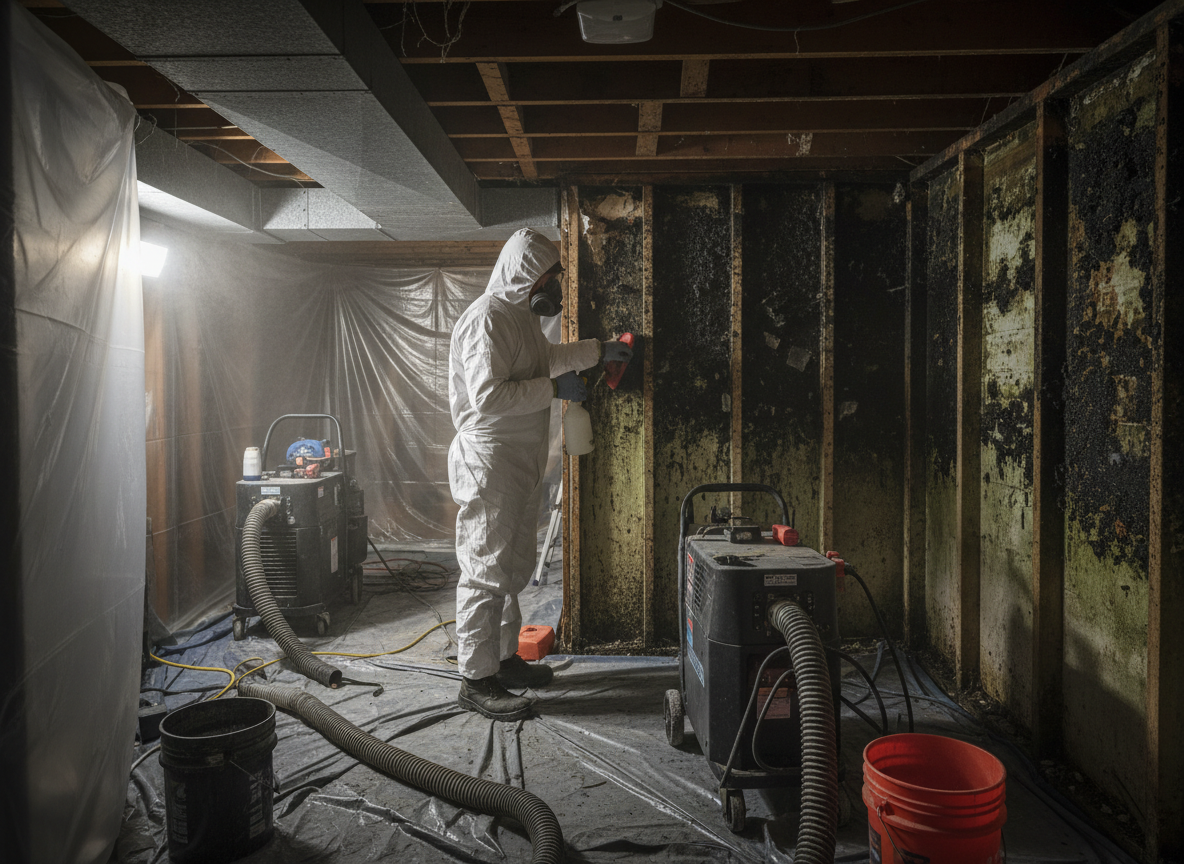
Edwards sits in Kern County high desert where hot summers drive rapid drying followed by cool winters that allow condensation to form inside walls and under slabs. Homes near Edwards Air Force Base often feature concrete foundations and older ductwork that trap moisture from irrigation or rare heavy rains, letting mold spread behind drywall before residents notice musty odors. Technicians must account for the porous desert soil that lets water migrate under structures and the wind that carries spores into attics through vents common in base housing.
Mold remediation company work here requires strict containment because the dry air can aerosolize spores quickly once disturbed. Crews seal off rooms with plastic sheeting and negative air machines before removing affected drywall, insulation, or carpet in neighborhoods surrounding the base. After removal, HEPA vacuuming and antimicrobial treatments address residual growth on wood framing or HVAC components that run through many Edwards homes built decades ago.
Access challenges arise in slab-on-grade homes typical around Lancaster and Mojave where plumbing leaks hide beneath tile or carpet. Remediation teams often cut exploratory openings in floors or ceilings to trace moisture to its source before full cleanup. Post-remediation verification includes moisture meter readings and visual checks to confirm the structure is dry enough to prevent recurrence during the next cool season.
Technician insight
In Edwards, the thing that catches most people out with mold remediation company is how cool winter nights in the high desert let condensation collect behind baseboards in slab homes near Edwards Air Force Base even when no obvious roof leak exists.
Condensation Mold Behind Baseboards
A resident in Edwards noticed a musty smell after the first cool nights of winter. Inspection revealed moisture trapped along the north wall foundation due to temperature swings. We removed the lower drywall section, dried the cavity, and treated the framing. The odor disappeared and readings stayed dry through the following season.
How it works
- 1
Initial Assessment
Inspect all affected rooms, check moisture levels in walls and floors, and identify the water source using meters and thermal imaging.
- 2
Containment Setup
Seal the work area with plastic barriers and run negative air machines to prevent spore spread through the rest of the home.
- 3
Material Removal
Cut out and dispose of moldy drywall, insulation, and other porous materials while HEPA vacuuming surfaces.
- 4
Drying and Treatment
Apply air movers and dehumidifiers, then treat remaining surfaces with EPA-registered antimicrobials.
- 5
Final Clearance
Take moisture readings and perform visual inspection to confirm the space meets dryness standards before rebuilding.
Pricing
Pricing varies by the size of the affected area, depth of hidden moisture, and access difficulty in Kern County homes.