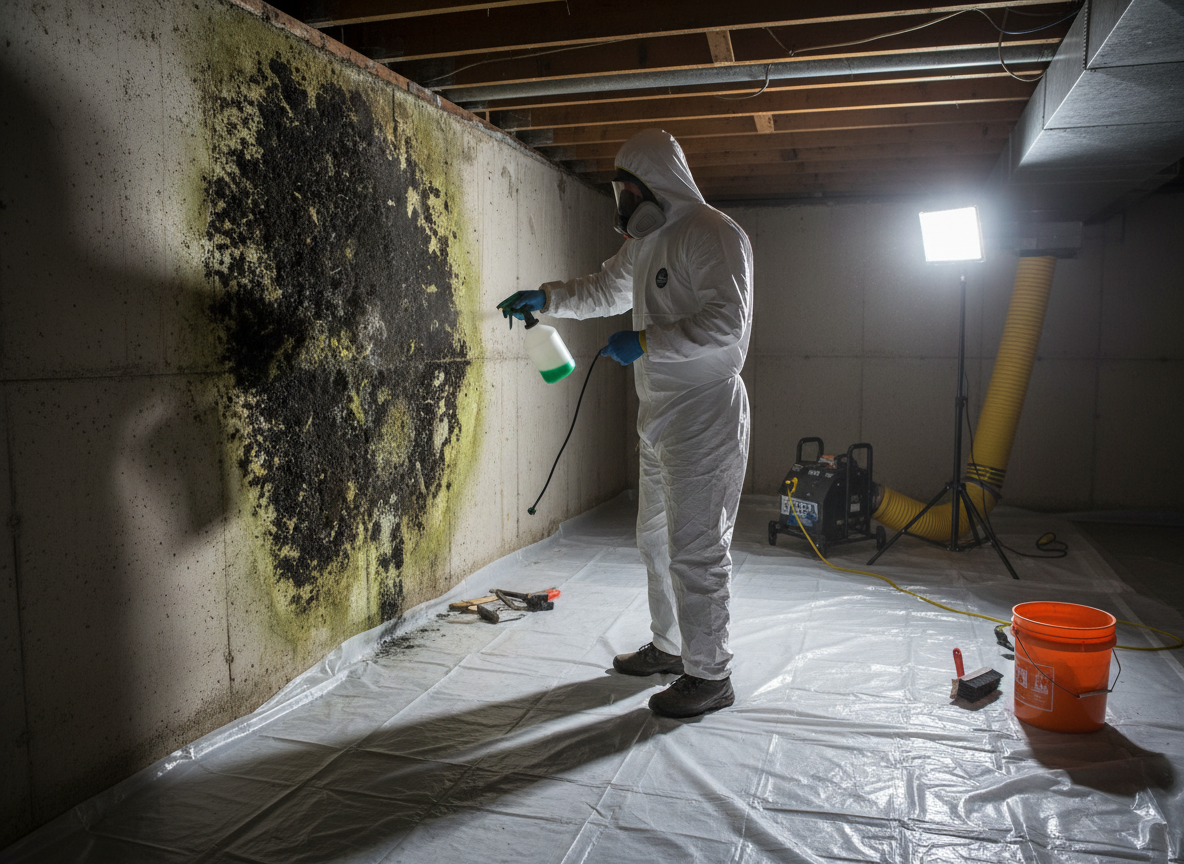
Edwards sits in Kern County's high desert where hot summers give way to cool winters that create condensation inside walls and crawlspaces of base housing and older Mojave-adjacent homes. Temperature swings drive moisture into stucco and drywall assemblies common around Edwards Air Force Base, allowing toxic mold to colonize behind surfaces before residents notice odors or health symptoms. Remediation crews must account for low humidity days that mask active growth until winter rains arrive and push spores deeper into insulation and subfloors.
Removal work in Edwards properties often involves negative-air containment to protect the tight floor plans of military family housing while HEPA vacuuming and antimicrobial treatments address Aspergillus and Stachybotrys colonies. Desert dust infiltrates vents and complicates clearance testing, so technicians run extended drying with dehumidifiers sized for the region's low moisture-holding air. Homeowners near Lancaster sometimes discover hidden growth after HVAC upgrades that altered airflow patterns in 1960s-era structures.
Kern County codes require proper disposal of contaminated materials at approved landfills rather than on-site burial common in rural desert lots. Crews document moisture mapping with infrared cameras because cool winter nights can reintroduce condensation within hours of initial drying. Residents in Edwards and surrounding areas should avoid disturbing visible growth themselves, as disturbing colonies in low-airflow homes can spread spores through shared wall cavities into adjacent units.
Technician insight
In Edwards, the thing that catches most people out with toxic mold removal is how cool winter nights in the high desert pull moisture back into walls of 1950s-era base housing after you think the job is done, especially when shared ventilation between units lets spores travel before anyone smells it.
Hidden Growth in Edwards Base Housing
Residents near Edwards Air Force Base reported musty smells after winter rains. Inspection found toxic mold behind drywall in a crawlspace where desert temperature swings had trapped condensation. Containment, removal, and targeted drying restored conditions without disturbing adjacent units.
How it works
- 1
Initial Assessment
Technicians arrive within hours and use moisture meters plus infrared imaging to map hidden growth behind walls and under floors in Edwards homes.
- 2
Containment Setup
Plastic barriers and negative air machines isolate the affected zone to prevent spore migration into unaffected living spaces common in base housing layouts.
- 3
Removal and Cleaning
Contaminated drywall, insulation, and trim are removed, followed by HEPA vacuuming and antimicrobial application on remaining surfaces.
- 4
Drying and Clearance
Industrial dehumidifiers and air movers run until readings meet industry standards, then independent testing confirms safe conditions before reassembly.
Pricing
Costs depend on square footage affected, access difficulty in Edwards Air Force Base housing, and whether HVAC systems require separate cleaning.